










PICO-8

Nerdy
Game Design
game design:
Player Movement Types

Player movement is one of the most important systems in any game because it is foundational to the gameplay experience. It defines how players interact with the world, how challenges are designed, the pacing, and how the game feels moment to moment. Small changes in movement rules can completely alter pacing, difficulty, and player experience. Because of this, there is no single “correct” way to design movement, only approaches that better fit certain goals, genres, and player expectations.
This page serves as a reference list of common player movement types found in 2D games, organized by increasing complexity. Rather than promoting one style over another, the goal is to help you recognize, and intentionally choose movement systems that are appropriate to the challenge you want to tackle as a developer.
The names and categories are by no means "standard" or "official" but after much research, iteration, and consideration, we've landed on these as what we believe best distinguish them from each other. More importantly, we've organized them in a general order of development complexity, not player-complexity, so that you can choose the level of difficulty you are ready to build.
Many games layer multiple movement types together. Understanding these more as building blocks than standalone options makes it easier to choose a base movement for your game, and possibly expand on it later, or try to experiment with new ideas.
Let this also offer beginner developers a possible roadmap in their learning so not to bite off more than they can chew early on.
Table of Contents
- Minimal
- Constant Movement
- Fixed Movement
- Free Movement
- Gravity-Based
- Physics-Based
- State-Based
- System-Based
1. Minimal
Complexity: Very Low
Most of the game is automated with extremely limited inputs from the player. Simple buttons don't mean simple games however because you can focus your development on all the other automated elements of the game such as: animations, backgrounds, text, visual effects, story, music, etc.
1-Button Movement
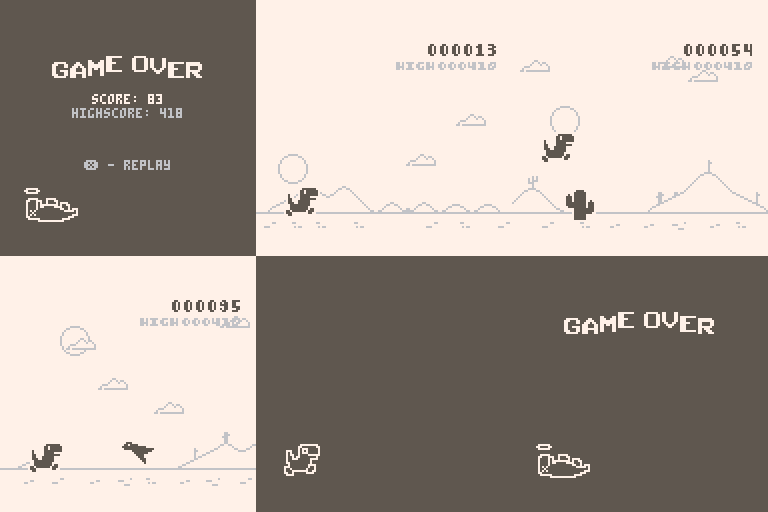
A single input controls all player movement, usually based on timing or rhythm. Examples include jump reaction timing and flap/boost mechanics.
Popular Games: Flappy Bird, Chrome Dinosaur Game, Geometry Dash
PICO-8 Examples:
2-Button Movement
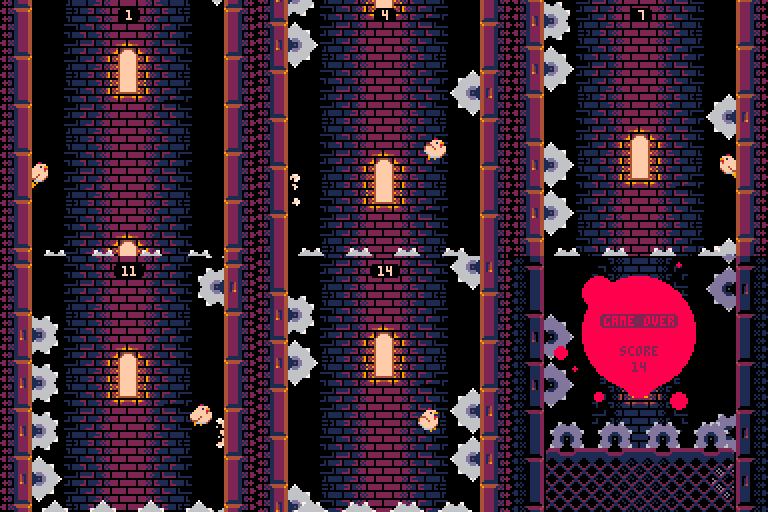
Two inputs split movement responsibility, such as "left & right" or "jump & slide". Only slightly more complicated than 1-button, but offers a much wider variety of options for game play.
Popular Games: Pong, Subway Surfers, Arkanoid
PICO-8 Examples:
2. Constant Movement
Complexity: Low
The player character is always moving, and the player can only control the change of direction or timing of actions during movement. Since most of the player's movement is automated, it makes it easier to develop the player input for specific actions because they are more predictable. You can focus more on the speed of the other objects in the game and the layout of the levels to create the difficulty curve and progression.
Forward Only
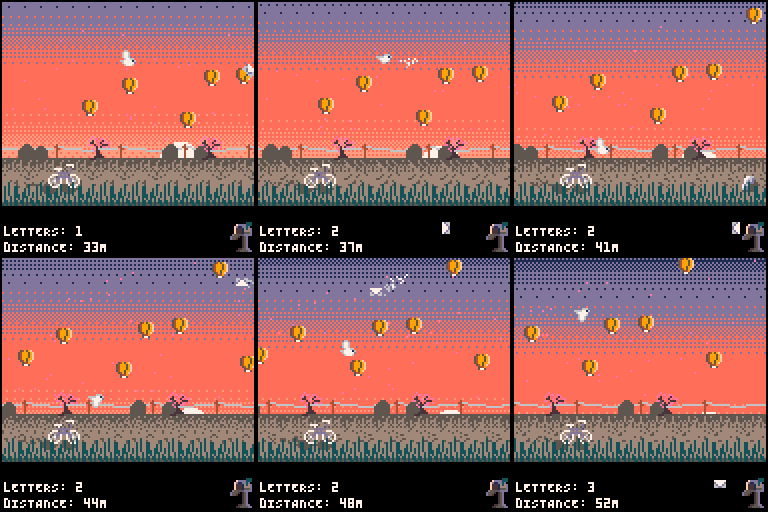
The player is always moving forward and can only influence height or position. Often used with minimal single button games, but it could also have more button options for different types of obstacles.
Popular Games: Jetpack Joyride, Bit.Trip Runner,
PICO-8 Examples:
Forward-March & Turn
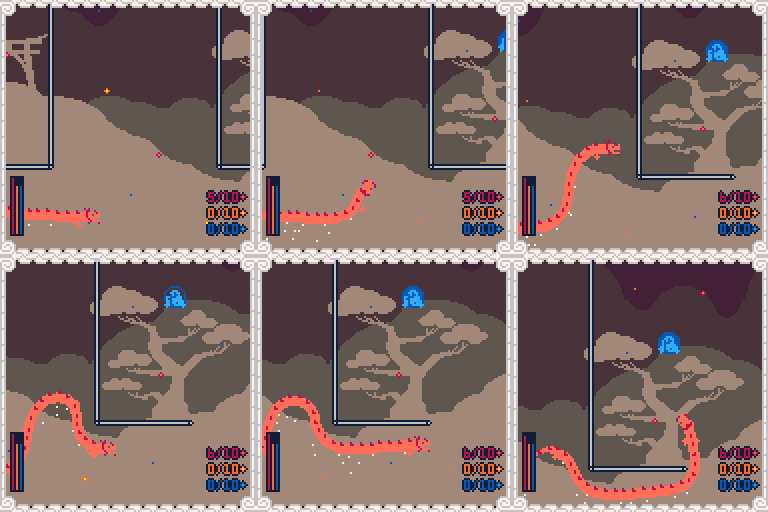
The player automatically moves forward and can only change direction or angle, emphasizing the timing of turns to avoid obstacles and move in optimal paths, usually towards pickups or away from enemies.
Popular Games: Pacman, Snake, Tron Lightbikes
PICO-8 Examples:
3. Fixed Movement
Complexity: Low-Medium
The player character moves step-by-step in a fixed grid pattern. The character moves only when the player inputs a directional button, usually limited to orthogonal directions. An advanced form of grid-based movement is to use an isometric view so that the square tiles are skewed into diamonds and the player appears to move diagonally, or even use other shaped tiles such as hexagons.
Tile-by-Tile
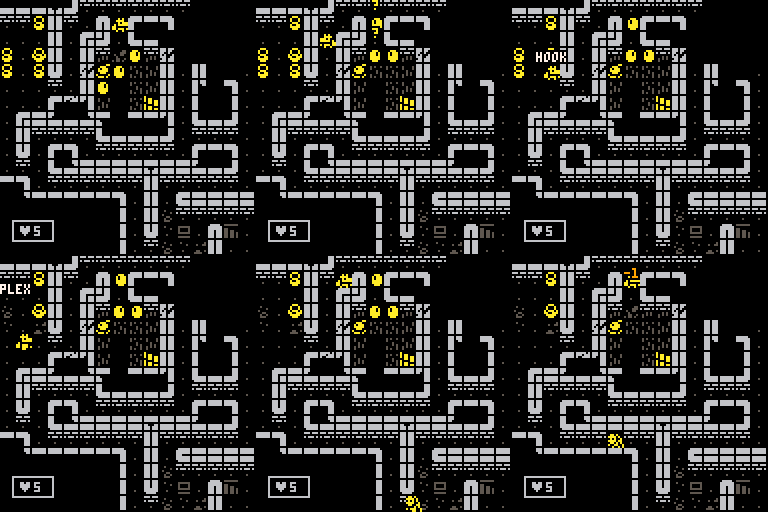
Player input directly and immediately controls the character's movement in consistent grid-aligned steps. Each input results in a fixed positional change, making movement predictable and easy to reason about.
Popular Games: Frogger, Baba is You,
PICO-8 Example:
Line-Slide
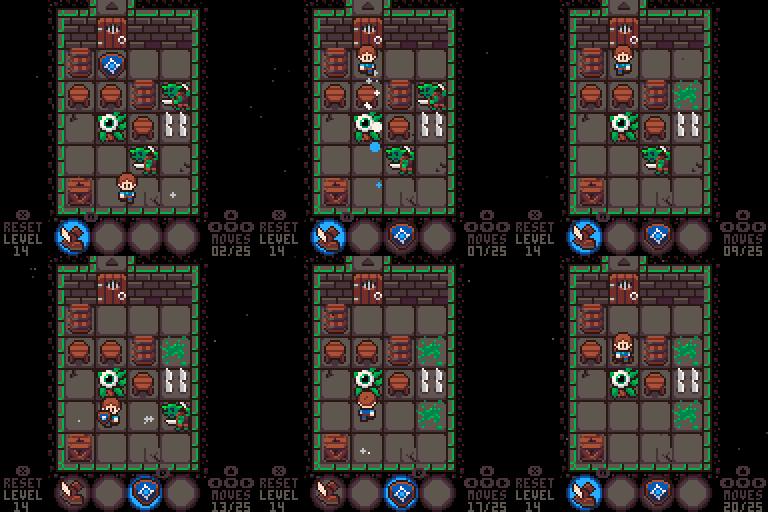
Movement is constrained along predefined paths or lines, allowing movement to continue in one direction until blocked by an obstacle or wall.
Popular Games: Amaze!, Pokemon (ice sliding puzzles)
PICO-8 Examples:
by Nerdy Teachers Druid Dash
by Achie72 Skiddy
by TheRoboZ Lab Cleaner
by preealpha
Select-to-Move
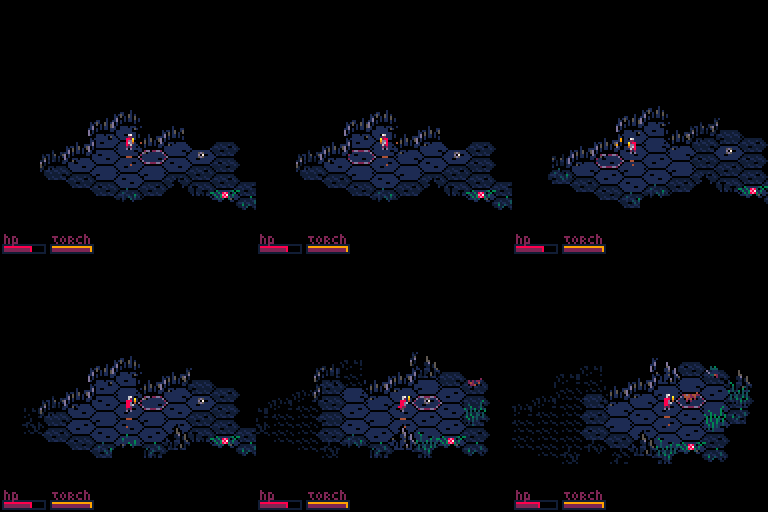
Movement where the player selects a destination location in the game world, then confirms the action to move there. The directional buttons don't directly and immediately move the player character, instead it changes the selected destination of a potential move among fixed options, then a second button press confirms the movement to actually happen.
Popular Games: Advance Wars, Fire Emblem, Final Fantasy Tactics
PICO-8 Examples:
4. Free Movement
Complexity: Low–Medium
The player has direct control of character position without fighting forces such as gravity nor being limited to a grid. They are most commonly used in top-down adventure games, shooters, and RPGs; games where freedom of exploration is encouraged.
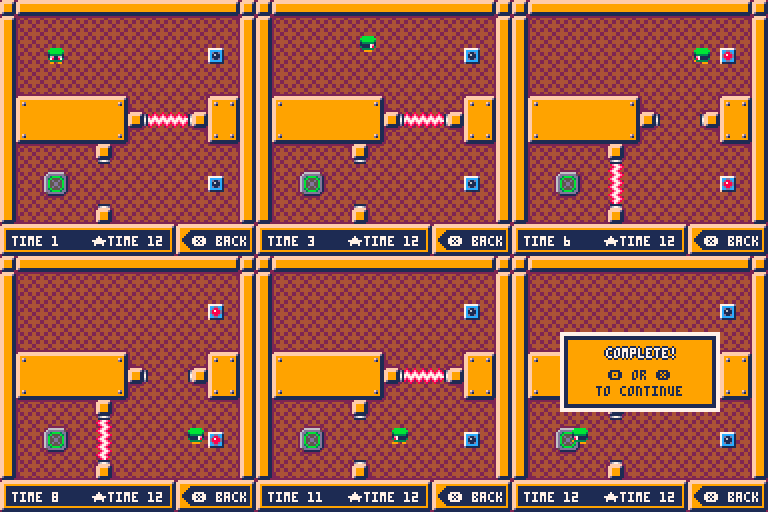
4-Directional
Movement is allowed only in the four basic orthogonal directions with precise control of the player character's position which is not fixed to a grid.
Popular Games: Bomberman, Breath of Fire, Final Fantasy
PICO-8 Examples:
8-Directional
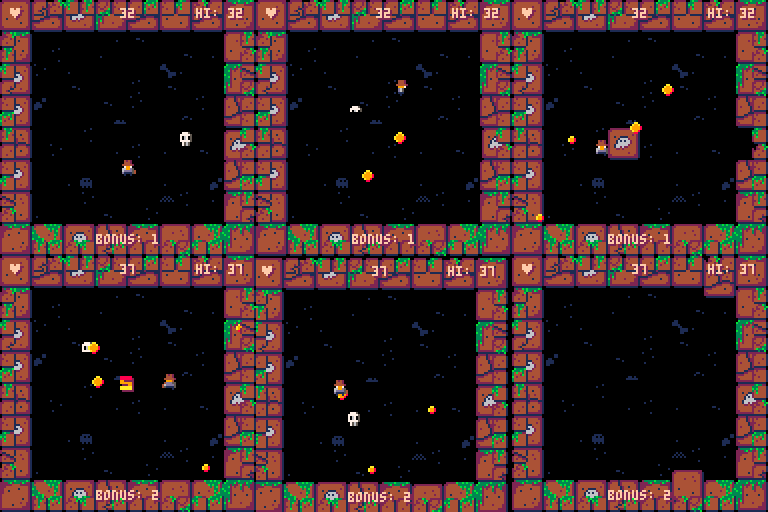
Movement is allowed in both orthogonal and diagonal directions, increasing freedom and allowing smoother navigation and positioning.
Popular Games: Link's Awakening, Dragon Quest / Dragon Warrior, Gauntlet, Harvest Moon
PICO-8 Examples:
Tank Control
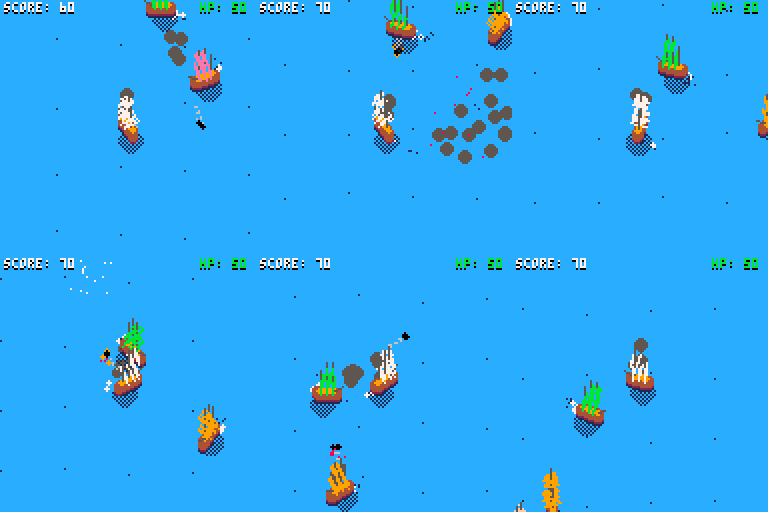
The player rotates to face a direction and then moves forward or backward, separating the directional buttons into orientation and translation. Usually the up/down buttons control forward/backward movement, while left/right buttons control rotation in clockwise/counter-clockwise directions.
Popular Games: Asteroids, Fire Power, Tomb Raider, DOOM
PICO-8 Examples:
Strafing
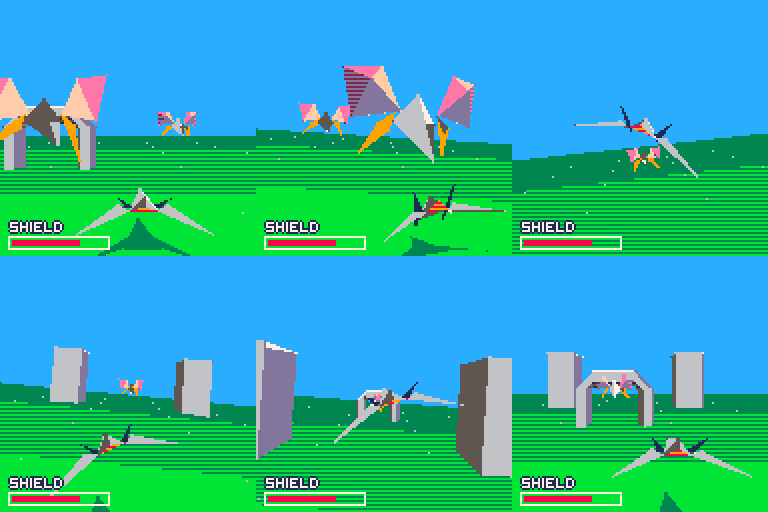
The player character holds a constant facing direction and instead of turning, there is a sideways motion or momentum-based sliding. Similar to Tank Control but the buttons slide around a focal point instead of changing orientation. Not just 3D shooters like the example but most shoot-em-ups use this style of button input for movement through a side or vertically scrolling game.
Popular Games: Star Fox, Nuclear Throne, Ape Out
PICO-8 Examples:
5. Gravity-Based
Complexity: Medium
The characters and most objects in the game are affected by gravity and ground detection as the basis of physics in the game world. Platformers of all types fall under this and may vary with features and abilities by following, altering, or breaking the rules of gravity. But platformers aren't the only games to apply gravity. 2D side-scrolling endless runners, or falling-block puzzles, endless falling games, or even the simple catch-the-falling-fruit game all simulate gravity to some degree. Here we've listed the common movement features added to gravity-based games.
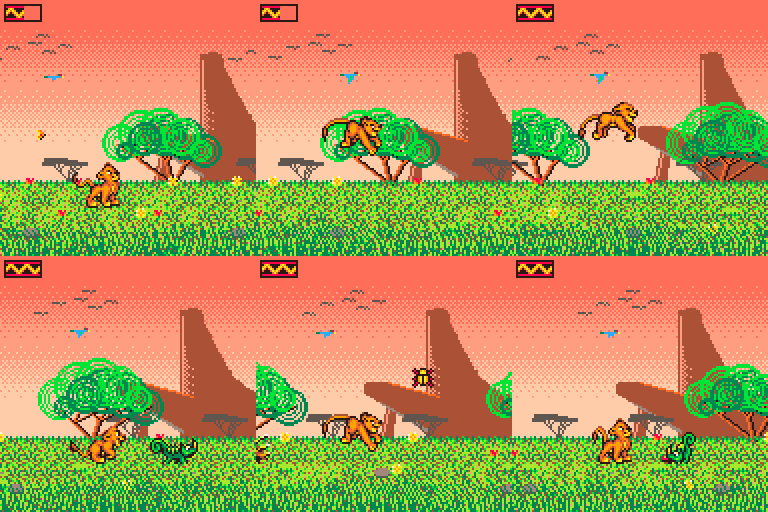
Run & Jump
Horizontal movement combined with jumping under gravity, forming the simplest foundation of most platformer movement systems.
Popular Games: Alladin (SNES) Lion King (SNES), Mickey's Magical Quest,
PICO-8 Examples:
Variable Jump Height
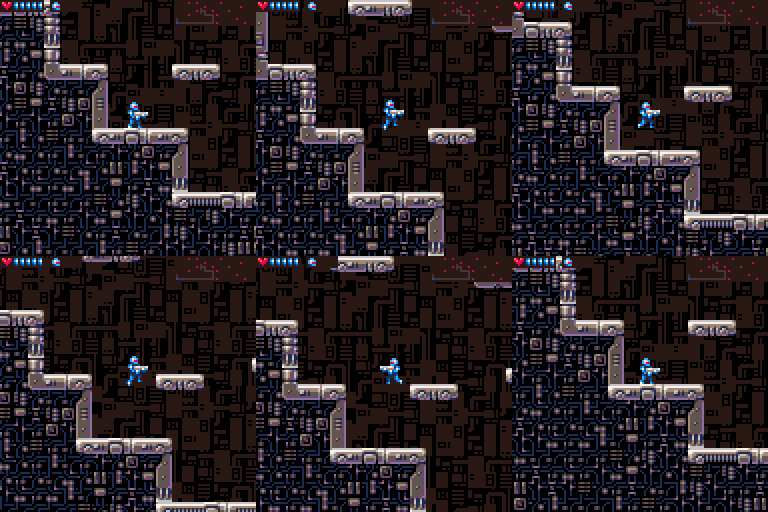
The height of a jump depends on how long the jump button is held, allowing more expressive and precise control. This is a must in precision platforming and even in some endless runners.
Popular Games: Super Mario Bros, Super Meat Boy, Mega Man 2
PICO-8 Examples:
by paranoidcactus Froglegs
by LokiStriker [ Data Restored ]
by sweaters Pico Froggo
by TheSmellyFrog
Coyote Time
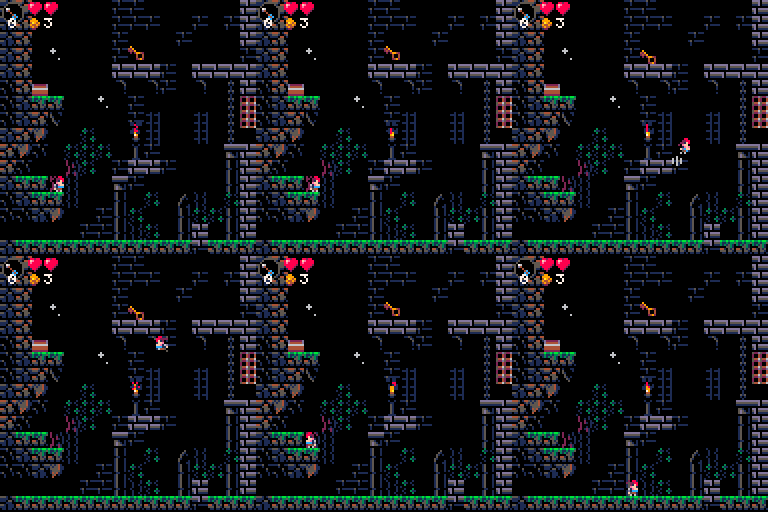
A short grace period after leaving a platform during which the player can still jump, improving game feel. Named after Wile E. Coyote of Looney Tunes for when he often ran off the edge of cliffs, standing in midair and only fell when he realized nothing was supporting him.
Popular Games: Hollow Knight, Crash Bandicoot
PICO-8 Examples:
Acceleration & Friction
Movement speed ramps up and slows down rather than changing instantly, creating weight and momentum.
Popular Games: Tribes Ascend, Burnout, Spider-Man 2
PICO-8 Examples:
Double-Jump
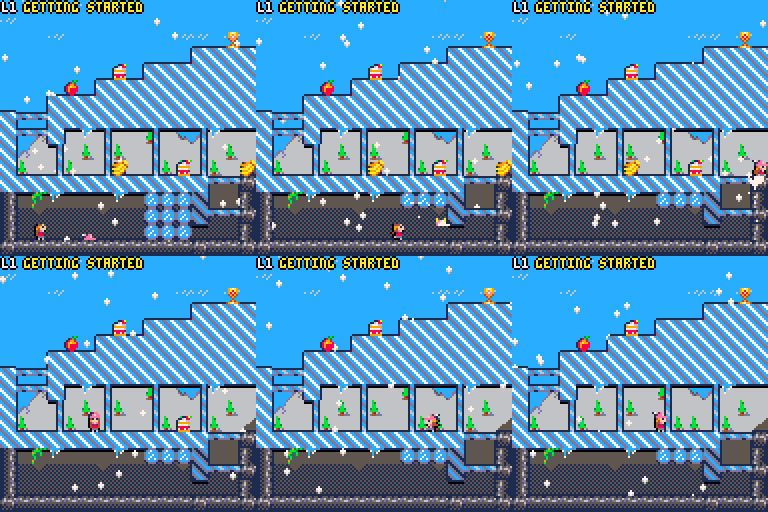
Allows additional jumps while airborne, increasing vertical reach and recovery options. Some games allow multi-jumping all the time as a part of the player's movement ability, while some games (like the example) offer temporary ability-granting collectables that allow the double-jump only in certain places.
Popular Games: Ori and the Blind Forest, Super Smash Bros.
PICO-8 Examples:
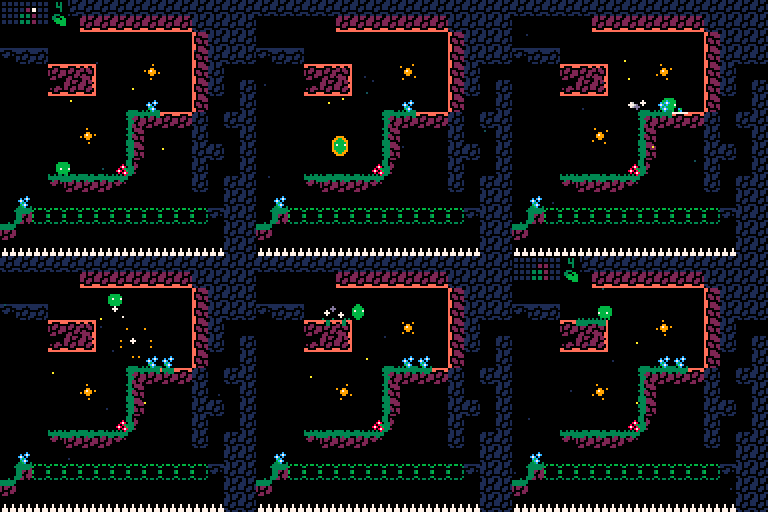
Wall Jump
The player can jump off vertical surfaces, enabling vertical traversal and wall-based challenges. Usually includes sticking to or slowly sliding down vertical surfaces.
Popular Games: Super Metroid, Ninja Gaiden, Super Mario 64
PICO-8 Examples:
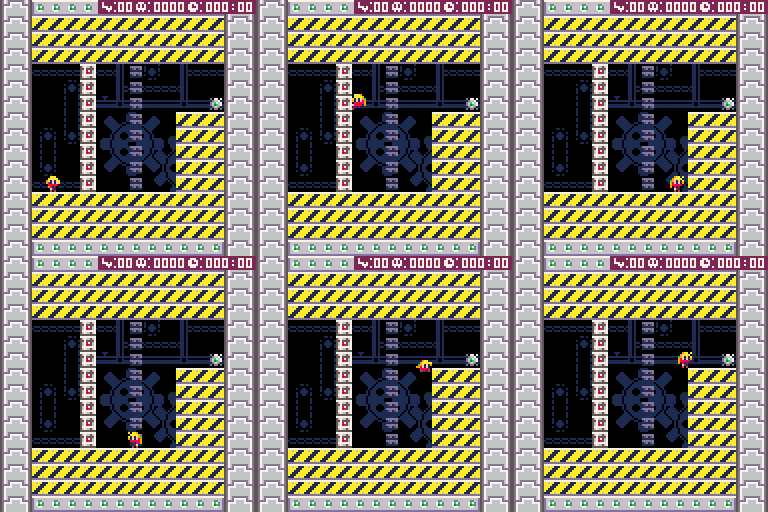
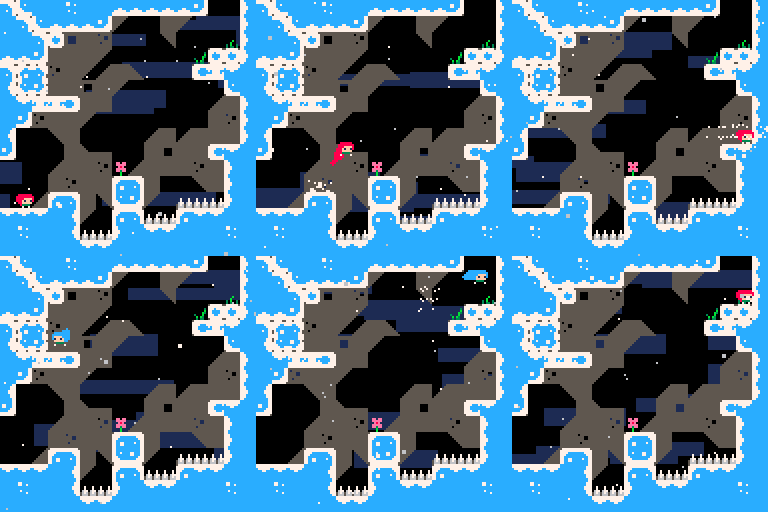
Dash
A short burst of speed that allows rapid repositioning, often overriding normal movement rules such as passing through obstacles or enemies.
Popular Games: Mega Man X / Rockman X
PICO-8 Examples:
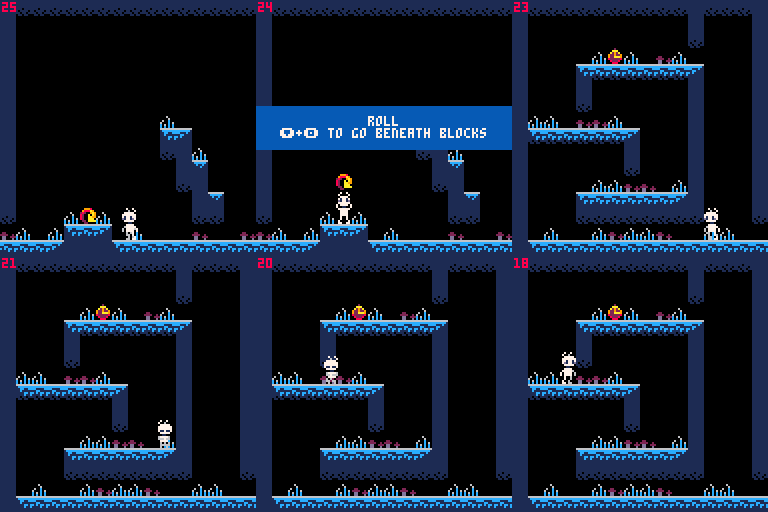
Sliding / Crouching / Rolling
A low-profile movement that carries momentum, often used to pass under obstacles, avoid attacks, or discover secret passages.
Popular Games: Metroid, Temple Run,
PICO-8 Examples:
by bluswimmer Penny the Pumpkin
by kaimonkey Adrift
by killocan Pole Station
by Pavilion
Climbing
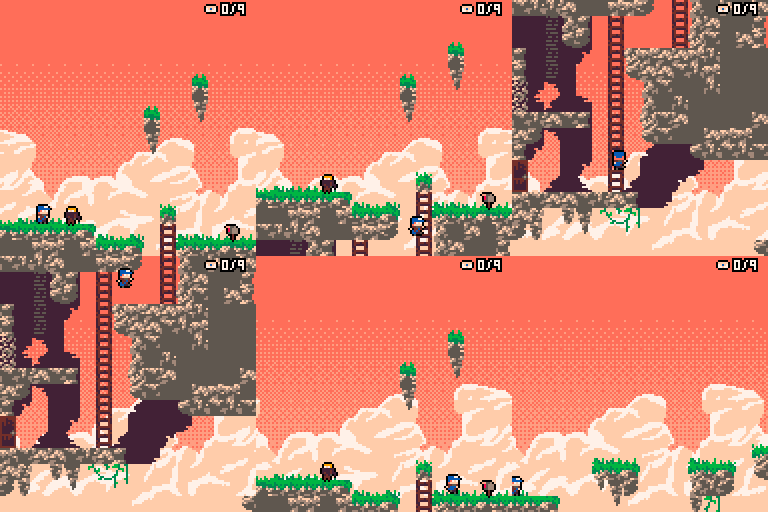
Allows vertical movement along ladders, vines, stairs, or walls, temporarily altering gravity rules.
Popular Games: Castlevania, Prince of Persia
PICO-8 Examples:
Gliding
This movement ability allows falling with slower than normal gravity rules which can extend a jump distance and offer more precision of landing.
Popular Games: Princess Peach (Super Mario Bros 2), Kirby's Dreamland, The King's Bird
PICO-8 Examples:
6. Physics-Based
Complexity: Medium–High
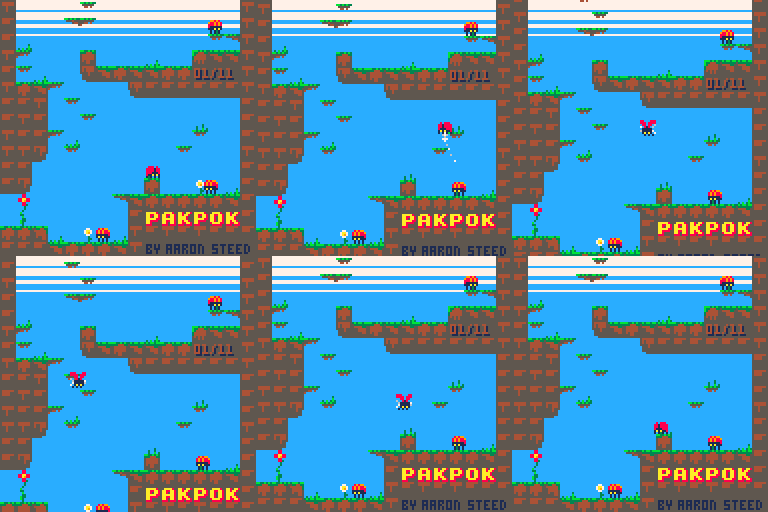
Movement emerges from forces rather than direct control (often layered on top of other movement types). These games are often extra creative with the player trying to move their character or object more indirectly like throwing, swinging, launching, hitting, etc. and so practice and skill is often needed to develop precise control in these games.
Velocity & Angle
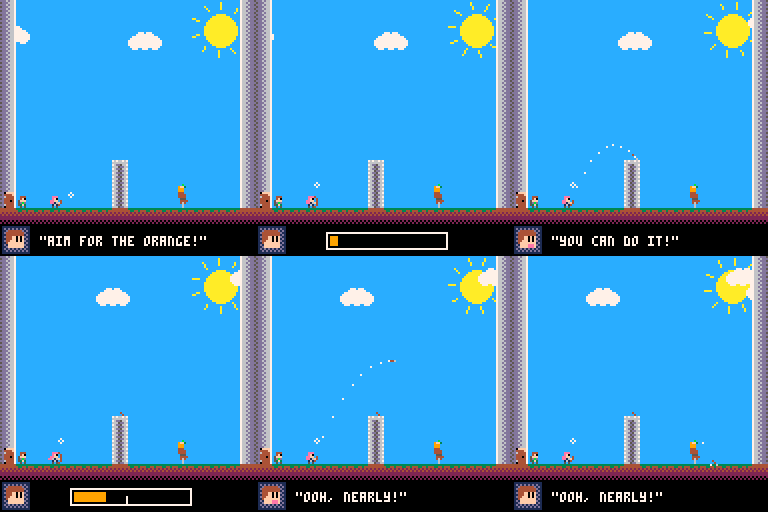
Movement direction and speed are controlled through vectors rather than fixed directions. Whether it's launching a rocket, an arrow, or a golf ball, you'll be carefully calculating your shot with power and angle.
Popular Games: Scorched Earth, Worms, Bowman
PICO-8 Examples:
Inertia / Drift
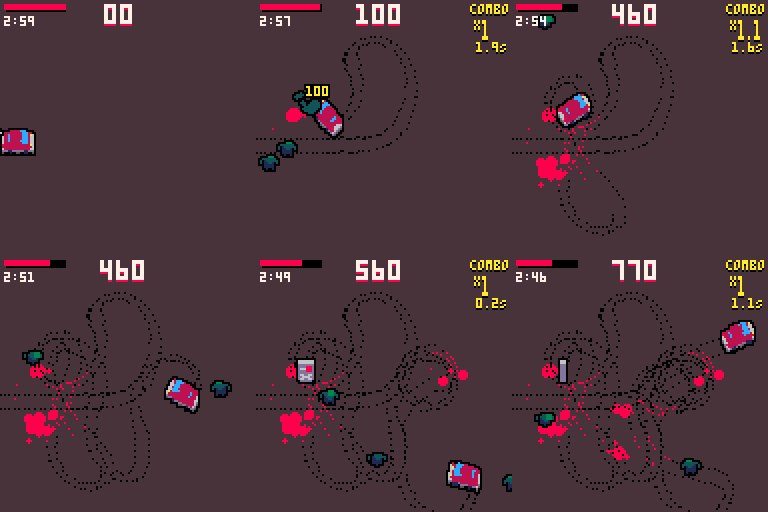
Movement continues after input stops, requiring anticipation, precision timing, and sometimes counter-force.
Popular Games: Asteroids, Lunar Lander
PICO-8 Examples:
Surface Friction Variations
Different surfaces modify acceleration, slowing or sliding effects, jump power, and/or increased or decreased control.
Popular Games: Cruisin' World, Chip's Challenge, Outrun
PICO-8 Examples:
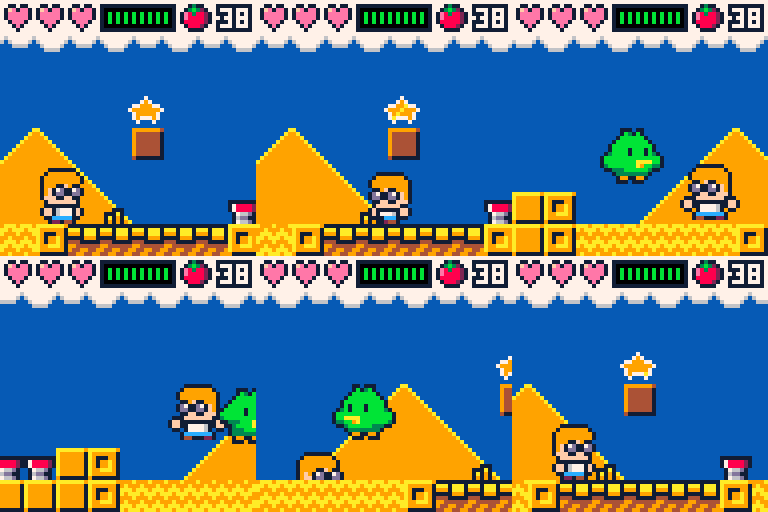
Knockback & Recoil
External forces from the environment or by other players or game objects push the player, temporarily overriding input. The physics feels bouncy and more realistic than many games where collision simply makes the character stop abruptly.
Popular Games: Marble Madness, Doom, Bump ‘n’ Jump
PICO-8 Examples:
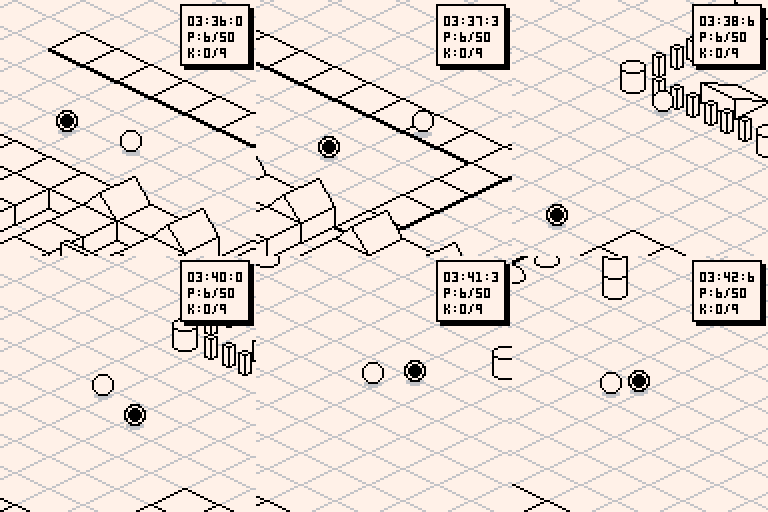
Swinging / Grappling
Player movement follows arcs and tension based on anchor points.
Popular Games: Pitfall, Jungle King, Spider-Man, Indiana Jones: Emperor's Tomb
PICO-8 Examples:
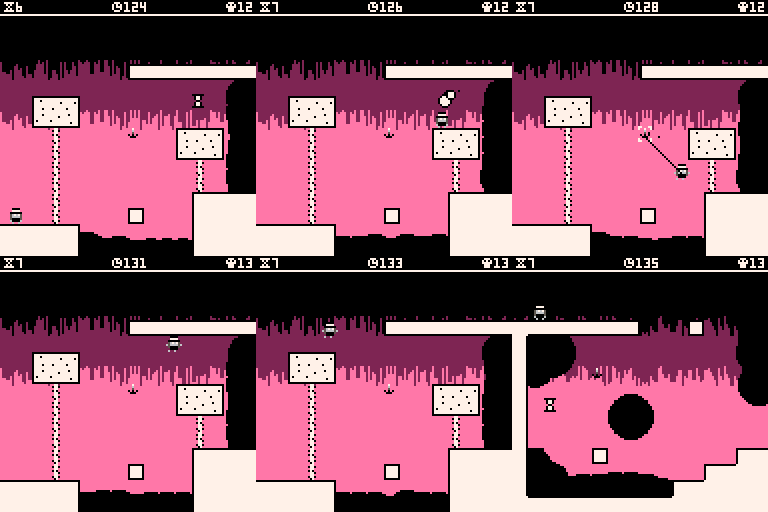
Ricochet
Movement direction changes based on collision angles and surfaces. Often used in addition to Angle & Velocity shooting style games.
Popular Games: Pong, Breakout, Thunderball, Peggle
PICO-8 Examples:
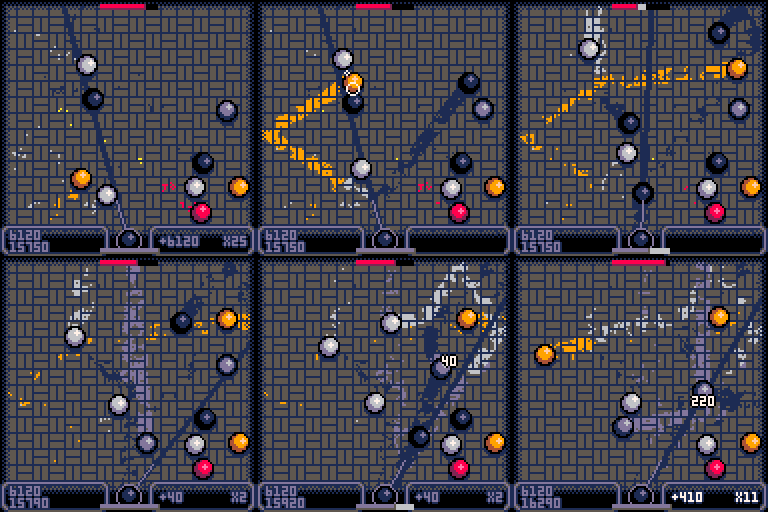
7. State-Based
Complexity: Medium–High
Movement rules change depending on the player’s current mode or state. This adds a layer of complication to any game such as a simple 4-directional top-down adventure where you can get in and drive a car, or a basic run-and-jump platformer where you can also swim. Multiple movement systems must then be programmed and identify when to apply each movement and smoothly switch between them.
Driving (Vehicle Mode)
Movement switches to vehicle-style handling with momentum, turning radius, and increased speed.
Popular Games: Grand Theft Auto, Hotline Miami
PICO-8 Examples:
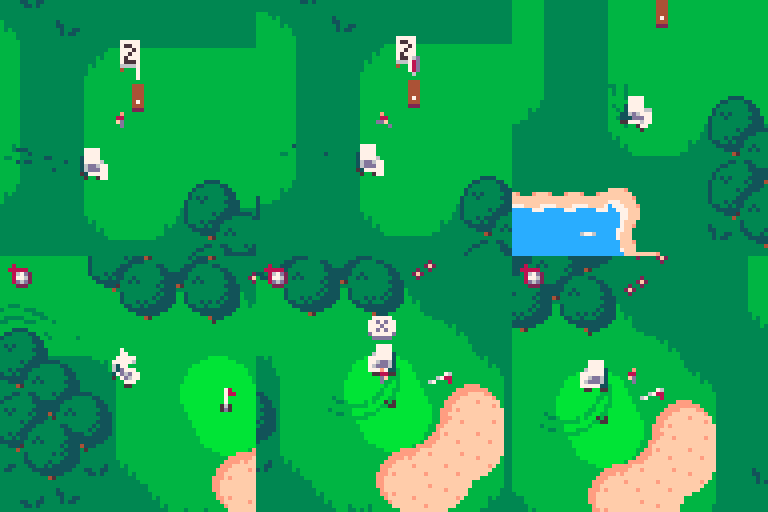
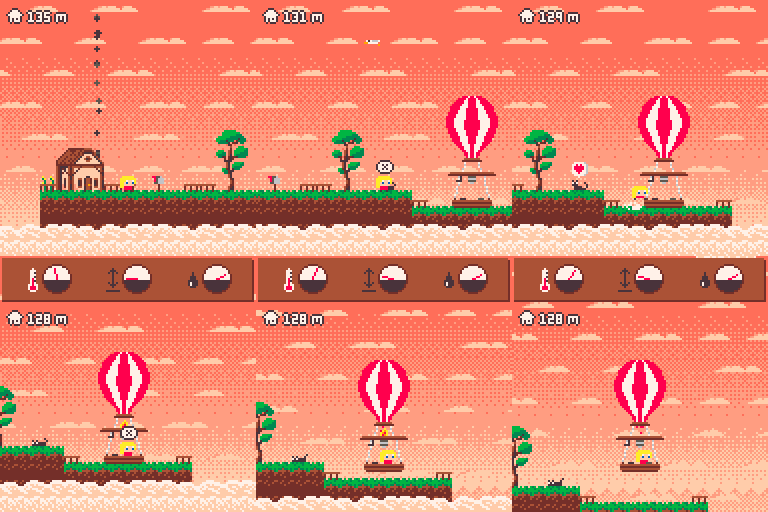
Flying (Airborne Mode)
Gravity is reduced or removed, allowing free vertical and horizontal movement.
Popular Games: Super Mario World, Banjo-Kazooie
PICO-8 Examples:
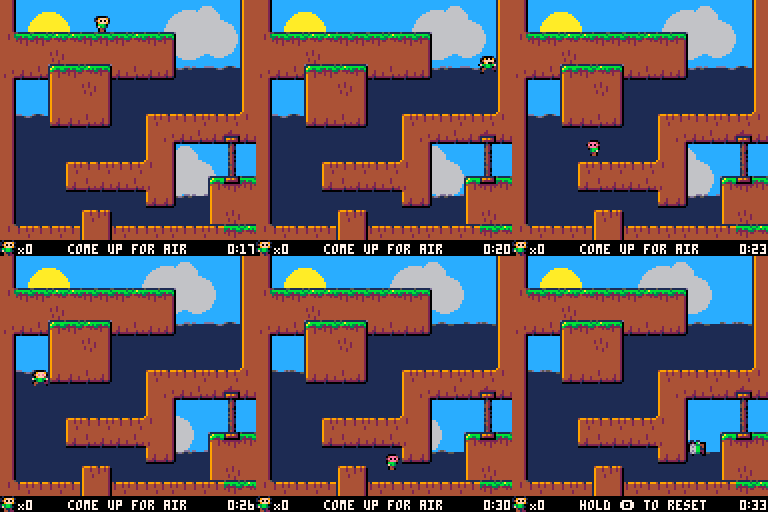
Swimming (Underwater Mode)
Movement is slower and more resistant, often with buoyancy and directional drag.
Popular Games: Donkey Kong Country, Secret of Mana, Teenage Mutant Ninja Turtle
PICO-8 Examples:
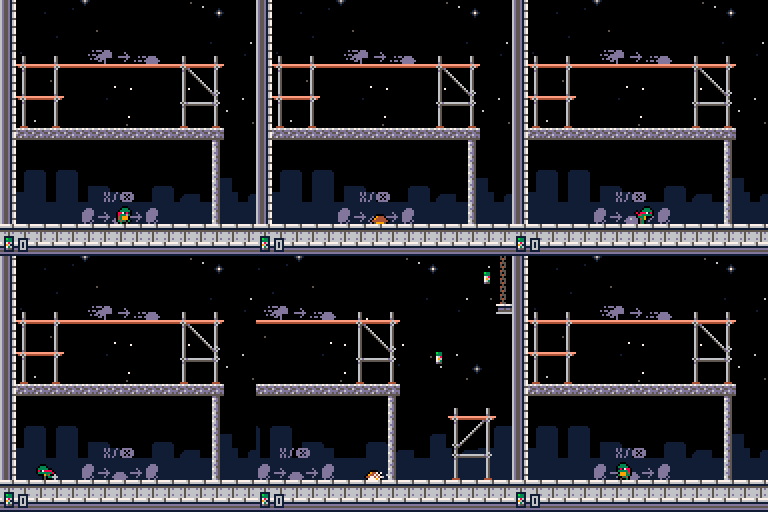
Transformation
Player switches between multiple forms, each with unique movement mechanics.
Popular Games: Kid Chameleon, Super Mario Bros. 3, Shantae, Majora's Mask
PICO-8 Examples:
8. System-Based
Complexity: High
Movement is governed by larger systems, rules, or the environment rather than direct player input alone. Player input is tied directly to complex systems that are in the forefront of the game. The development of these games will focus most of the initial time and energy into getting movement to look smooth and player-input to feel just right before getting into the rest of the game.
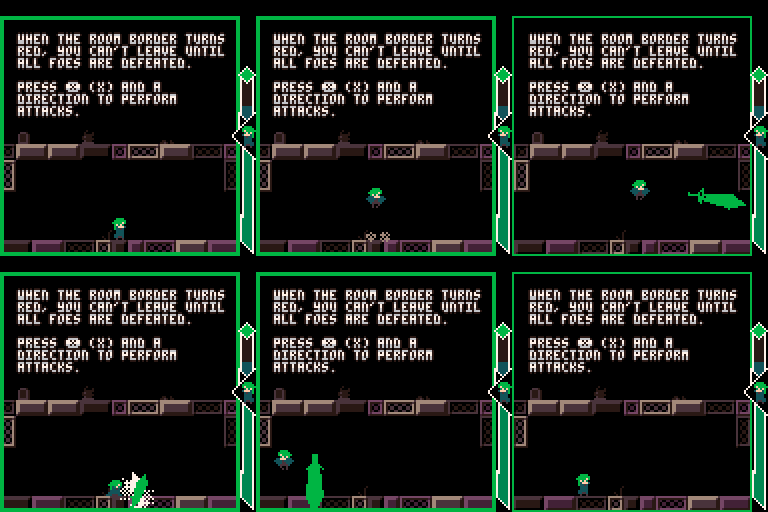
Combination-Button Actions
Movement emerges from specific input combinations or sequences rather than single button presses. Fighting games are the most common to use multiple input combo attacks. PICO-8 developers may also use this in any games as a way to work around the limited button options such as "hold X and press a directional button to use different items".
Popular Games: Super Street Fighter, Mortal Kombat
PICO-8 Examples:
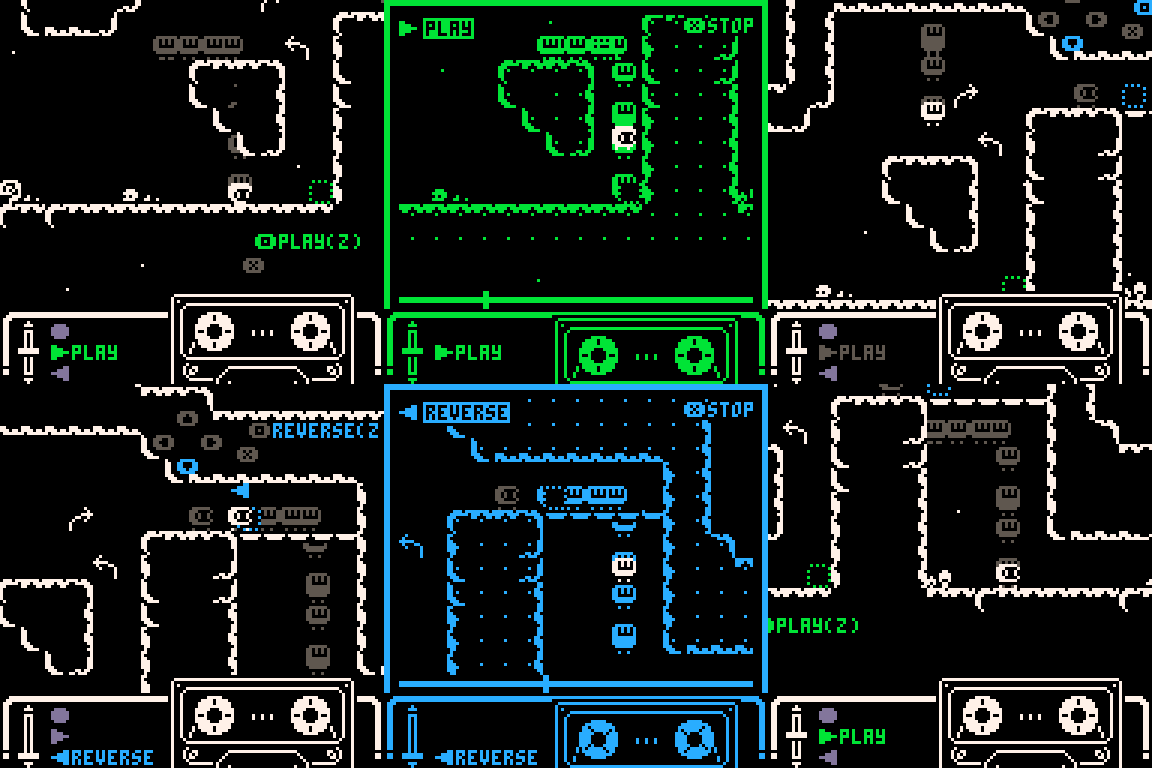
Time Manipulation
Player movement interacts with time itself, such as slowing, stopping, or reversing it.
Popular Games: Braid, Superhot, Life is Strange
PICO-8 Examples:
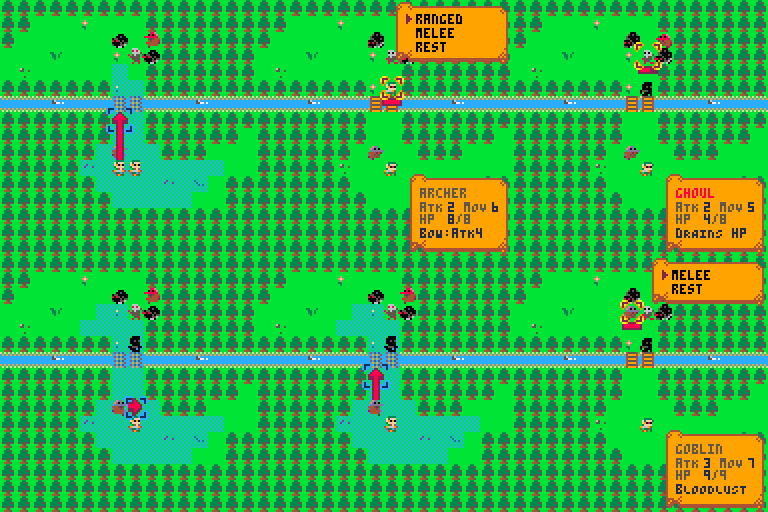
Pathfinding / Click-to-Move
The player selects a destination and the system determines the movement path towards that destination, even around obstacles.
Popular Games: Rainbow Six, Monkey Island, Final Fantasy Tactics
PICO-8 Examples:
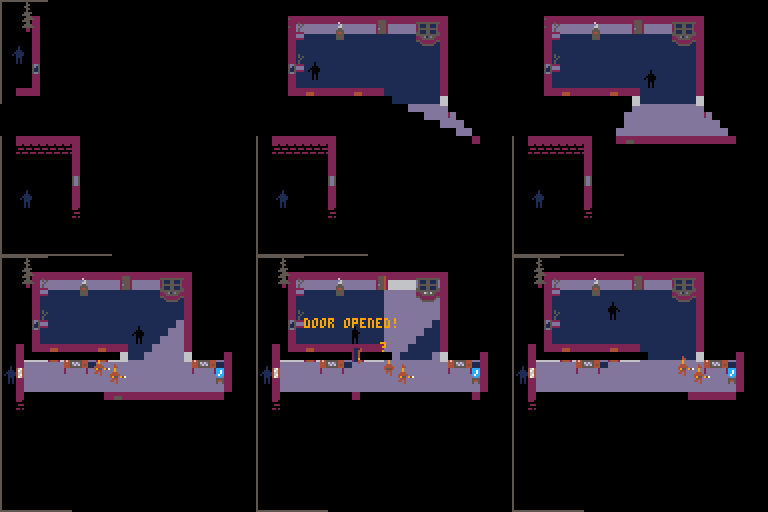
Line-of-Sight Based Movement
Movement options depend on visibility, sight lines, or perception rules. Often includes pathfinding along visibility changes.
Popular Games: Metal Gear Solid, Invisible Inc.,
PICO-8 Examples:
Rule-Changing Movement
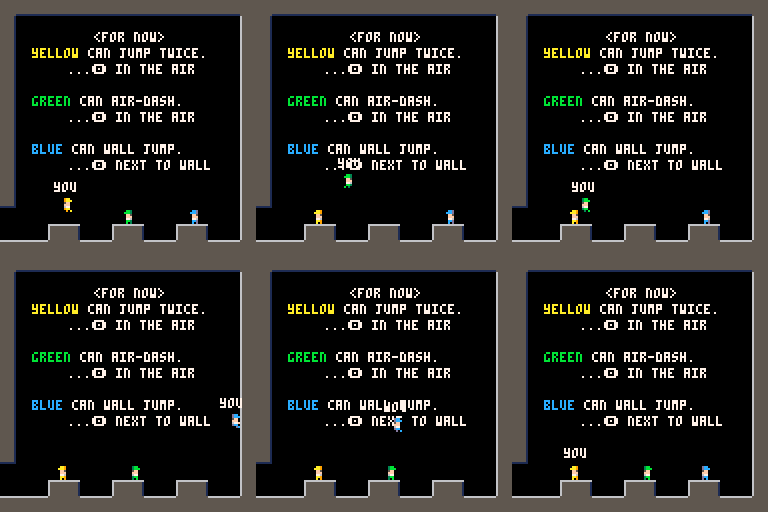
The game dynamically alters movement rules based on context, progression, items, or character swapping.
Popular Games: Portal, Baba Is You, Fireboy & Watergirl
PICO-8 Examples:
Meta-Movement
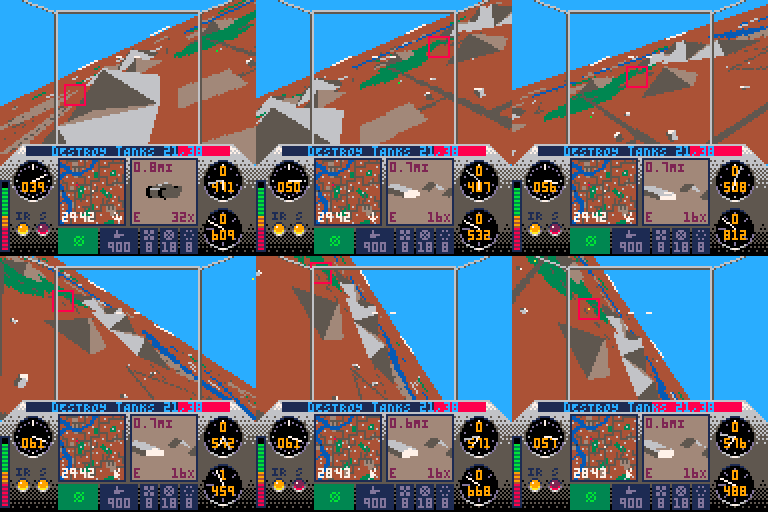
Instead of moving the player character, the world shifts around them. First Person games where you fly from a cockpit gives the illusion that you are moving through the world but from the developer's perspective it is actually the world that is moving to the player inputs. But this can also include some experimental perspective shifting 3rd person games as well.
Popular Games: FEZ, Superliminal, Battle Tanks
PICO-8 Examples:
5922
15 Dec 2025